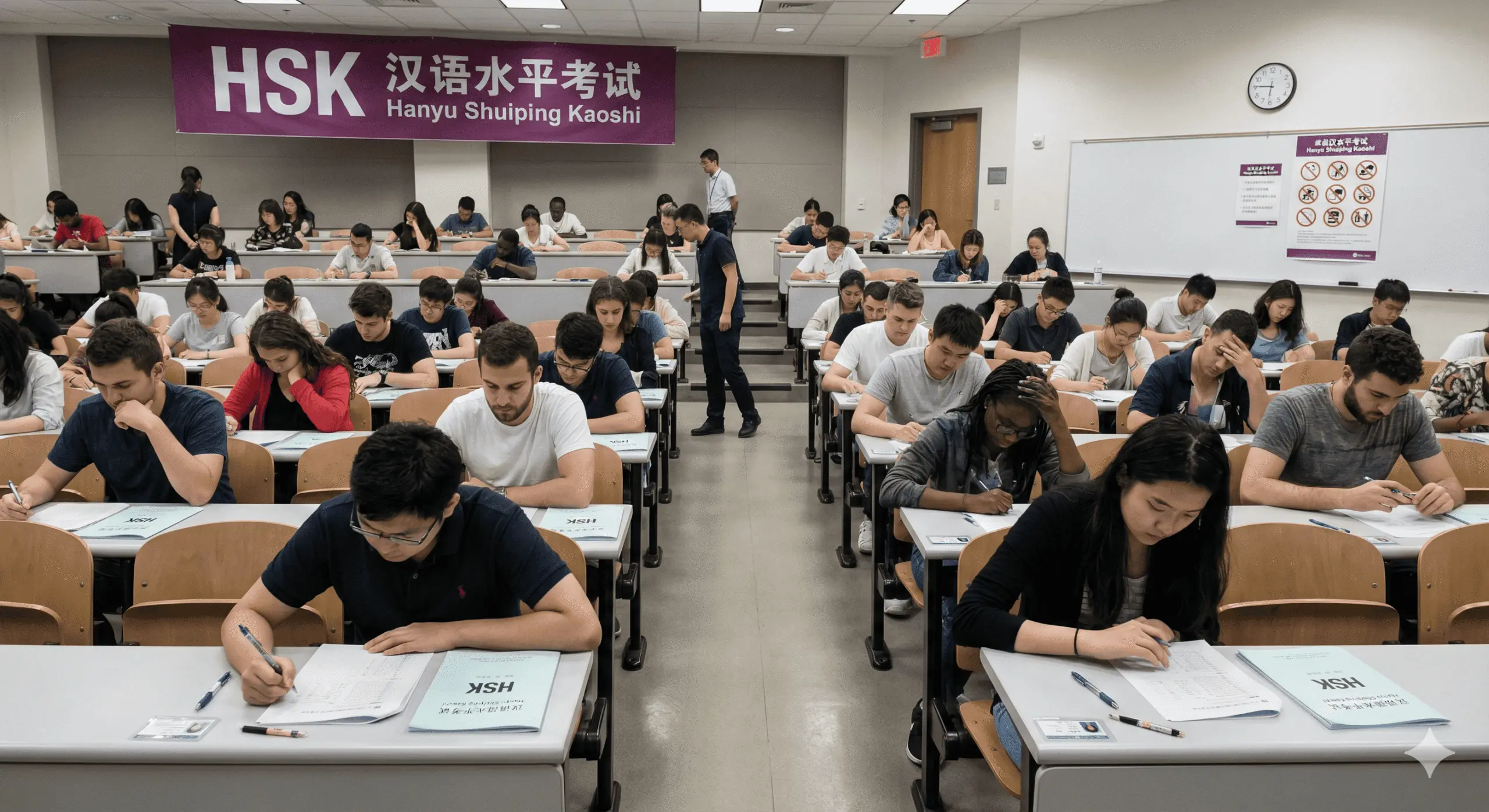
The “Old” HSK Levels are dead. If you are using a textbook printed before 2021, you are studying for a test that no longer exists.
Singapore has officially transitioned to the New HSK 3.0 Standard. But before we look at the new word counts, you need to understand why this happened.
Why Did Singapore Switch to HSK 3.0?
For years, the old system was criticized for being “too easy” compared to European standards (CEFR). A student could pass HSK 6 but still struggle to read a newspaper in Beijing.
To fix this, the new 2026 standard has made the beginner levels significantly harder to ensure a true measure of fluency.
The impact on Level 1 students is the most brutal:
- Old HSK 1 required 150 words.
- New HSK 1 requires 500 words.
That is a 233% increase in difficulty. Here is the full breakdown of the vocabulary gap across the first three levels:
HSK 2.0 vs. HSK 3.0: Vocabulary Gap
| Level | Old (2.0) | New (3.0) | Difficulty |
|---|---|---|---|
| HSK 1 | 150 Words | 500 Words | +233% 🚨 |
| HSK 2 | 300 Words | 772 Words | +157% |
| HSK 3 | 600 Words | 973 Words | +62% |
What to Expect in 2026 (Levels 1-3)
HSK Level 1 (Beginner)
Goal: Basic survival Chinese.
Previously, you only needed to know “Hello” and “Thank You”. Now, you need 500 words, including basic grammar patterns. You must be able to introduce yourself, order food, and ask for directions fluently.
HSK Level 2 (Elementary)
Goal: Simple daily exchanges.
With 772 words (up from 300), this level now bridges the gap to conversational fluency. You are expected to hold conversations about hobbies, weather, and family without long pauses.
HSK Level 3 (Intermediate)
Goal: Academic & Professional tasks.
This is the biggest jump. Nearing 1,000 words, Level 3 is often the minimum requirement for Singapore internships or university exchange programs. The listening speed is faster, and the reading passages are longer.
It’s Not Just Vocabulary…
In HSK 2.0, you could get away with just Pinyin input. HSK 3.0 requires copying characters by hand (stroke order matters) starting from Level 1.
Speaking tests are no longer separate. They are now integrated into the main exam, meaning you cannot pass the written paper if you fail the oral component.
For Level 4 and above, you are now required to translate sentences between English and Chinese, testing your bilingual flexibility.
Don’t Walk Into the Exam Unprepared
Most students fail because they study the old 150-word list and get shocked by the new 500-word exam paper.